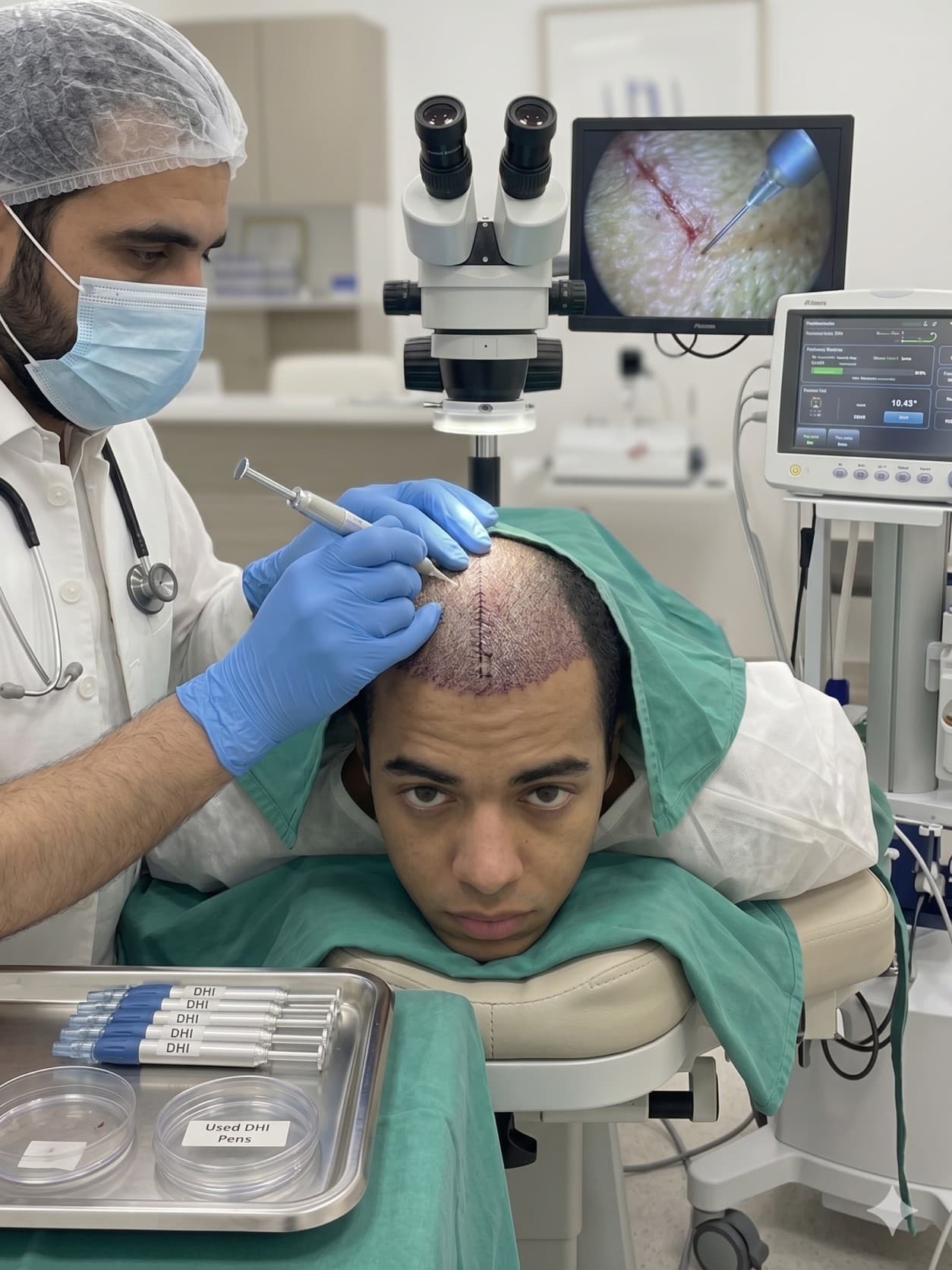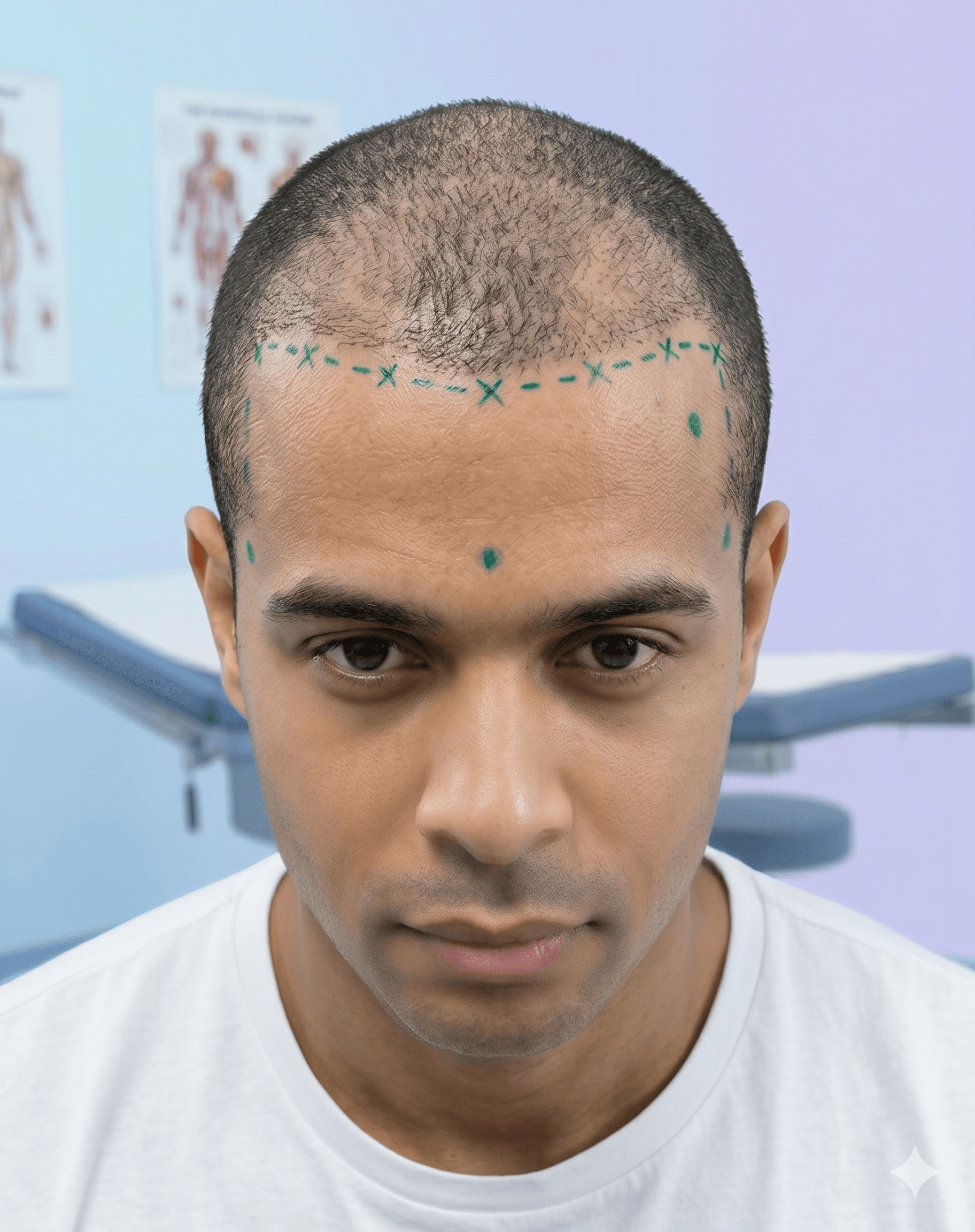
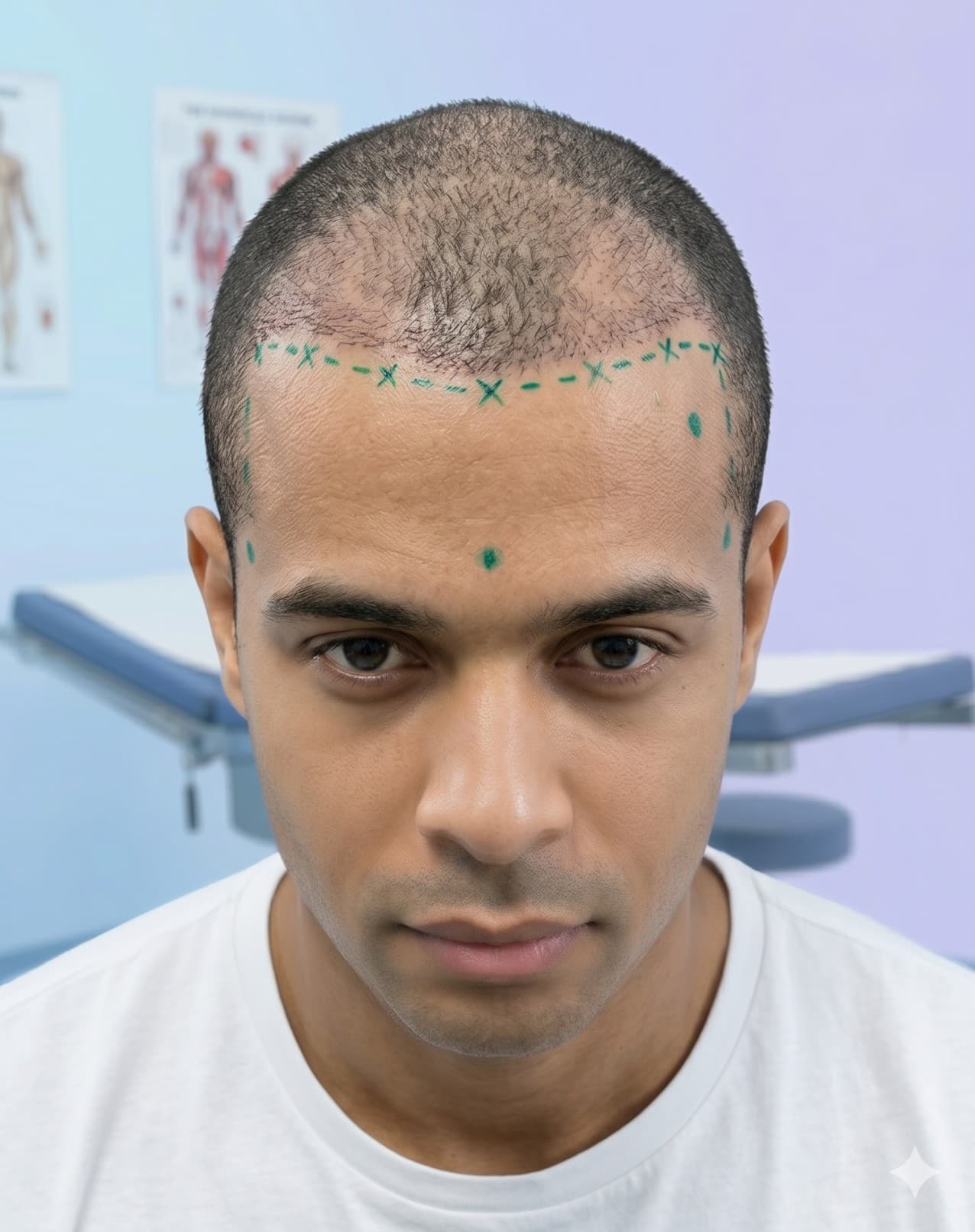
Hairline design is one of the most important parts of hair transplant planning. A high graft count can still look artificial if the hairline is too low, too straight, too dense in the wrong place, or placed without respect for age and future hair loss.
A natural hairline is not a perfect line. It has softness, irregularity, direction, and proportion. It should look believable from the front, sides, and in daily lighting.
Key Takeaways
Natural hairlines are slightly irregular, not ruler-straight.
The hairline must match age, face shape, donor supply, and future hair loss risk.
Density should be planned strategically, not forced everywhere.
Donor preservation matters because donor hair is limited.
A Natural Hairline Has Shape, Not Just Position
Patients often focus on how low the hairline can be placed. I focus first on whether the shape suits the face. A low hairline can look youthful in theory but unnatural in reality, especially as the patient ages.
The temples, frontal curve, forehead height, and facial proportions all influence design. The safest plan is usually one that restores framing without trying to erase maturity completely.
Perfectly Straight Hairlines Look Surgical
Natural hairlines have controlled irregularity. The front edge should not look like a drawn border. Single-hair grafts, soft transition zones, and careful spacing help create a believable result.
This is where artistry and restraint matter. Overpacking the front can make the hairline look dense but artificial.
Angle and Direction Decide Naturalness
A graft placed at the wrong angle can catch light incorrectly and stand out. Frontal hair needs to lie and grow in a natural direction. Crown and temple areas also have their own directional patterns.
Technique matters, but technique without design is incomplete. Extraction, handling, and placement all support the final appearance.
“The best hairline is the one people do not stop to analyze. It simply looks like it belongs.”
Dr. Karamat Ullah Miami
Density Is Important, but It Has Limits
Patients often ask for maximum density. The problem is that donor hair is limited and scalp blood supply has limits. Trying to place too many grafts too aggressively can compromise survival and future planning.
Good density planning uses grafts where they create the most visible improvement while preserving donor supply for future needs.
- Front hairline softness
- Mid-scalp coverage
- Crown expectations
- Future hair loss risk
- Donor area preservation
A Hairline Should Age Well
A hairline that looks exciting immediately after surgery may not always age well. If it is too low or too aggressive, it can look unnatural later if hair loss continues behind it.
Responsible planning considers the patient now and the patient years from now. This is especially important for younger men with progressive hair loss.
Common Questions
FAQs
Naturalness comes from appropriate height, soft irregularity, single-hair grafts at the front, correct angle, and planning around facial proportions.
Private Consultation
Plan a Natural Hairline Before Choosing Graft Numbers
Book a private hair analysis to discuss donor supply, hairline design, density goals, FUE, DHI, and long-term planning.