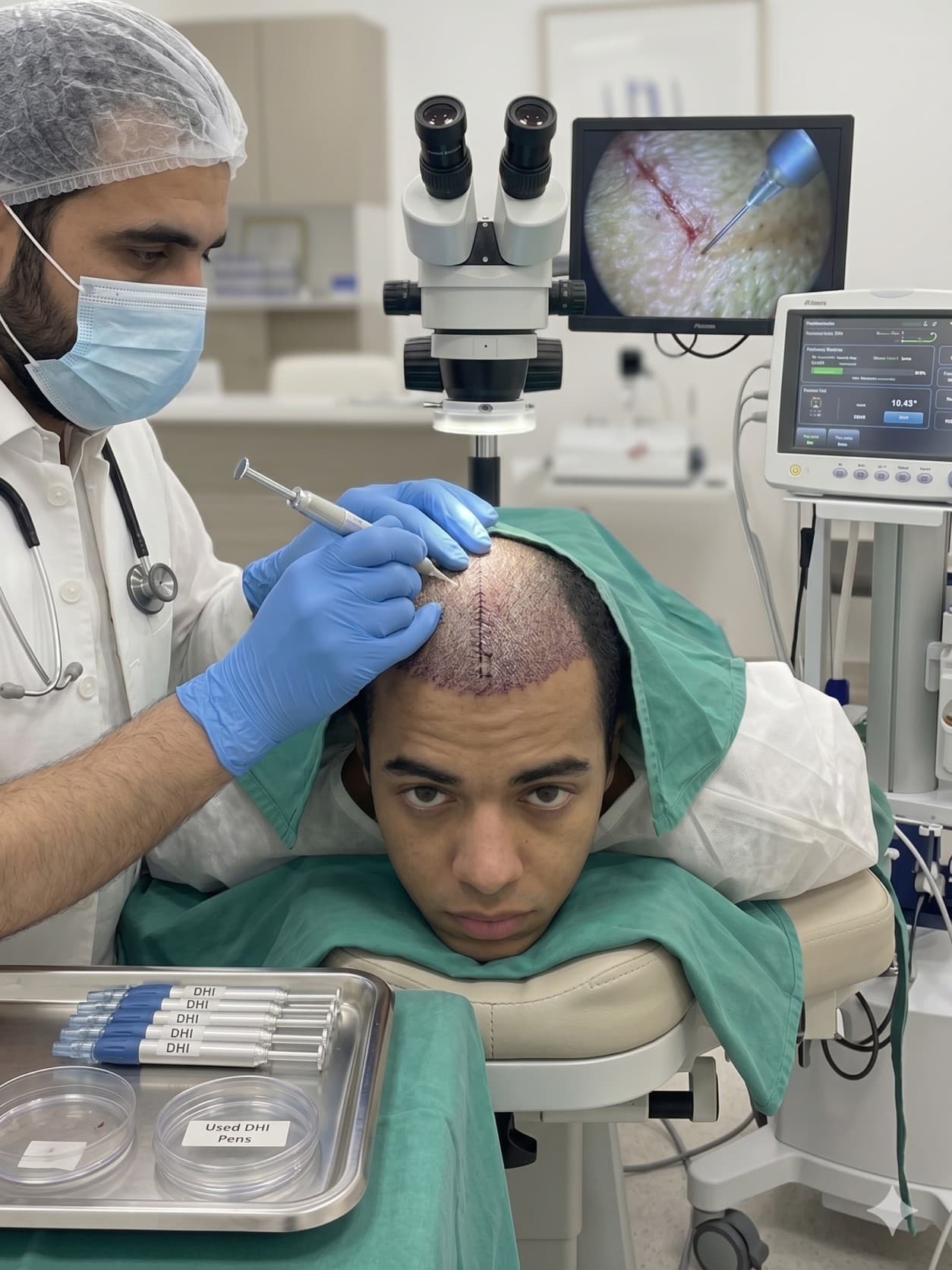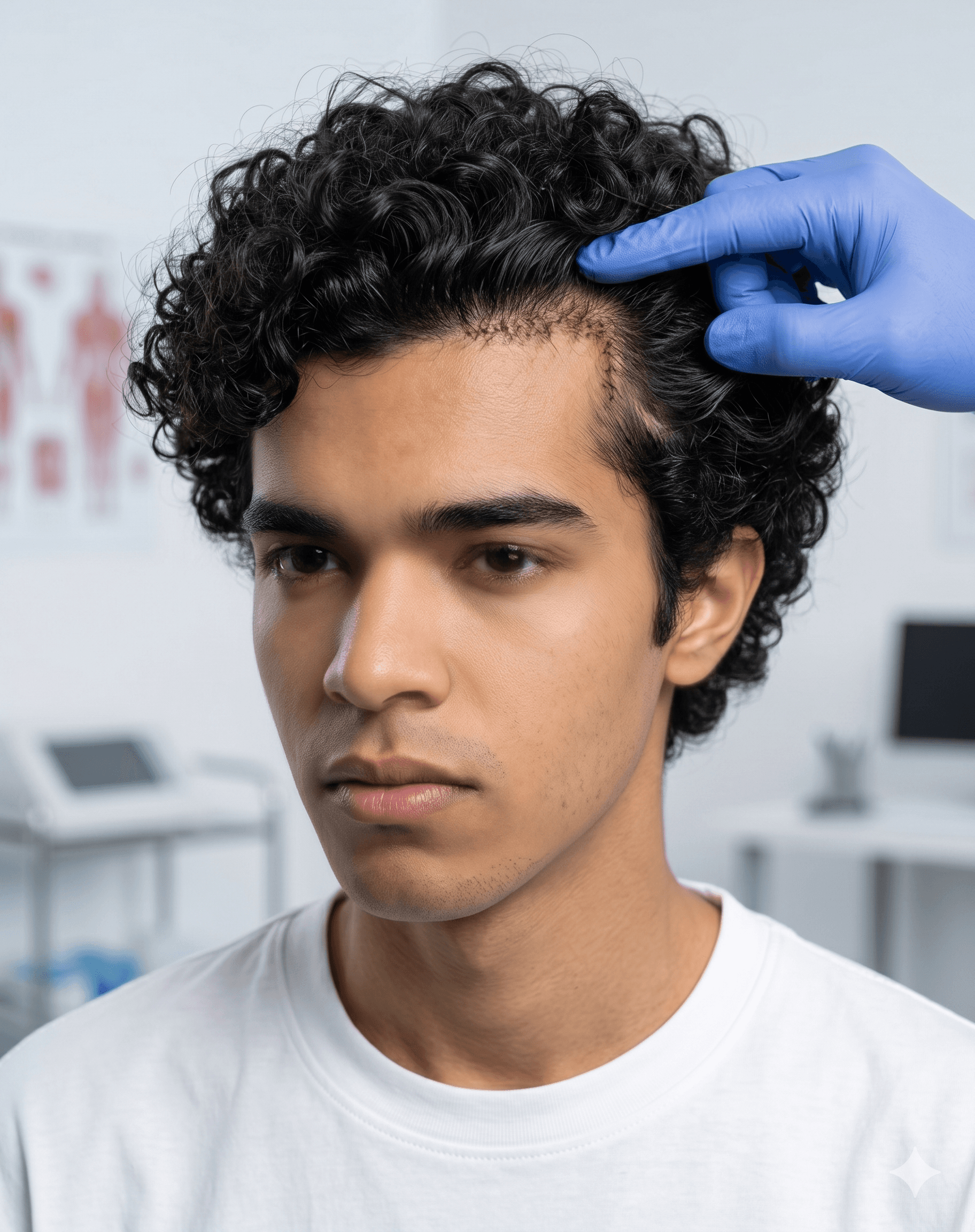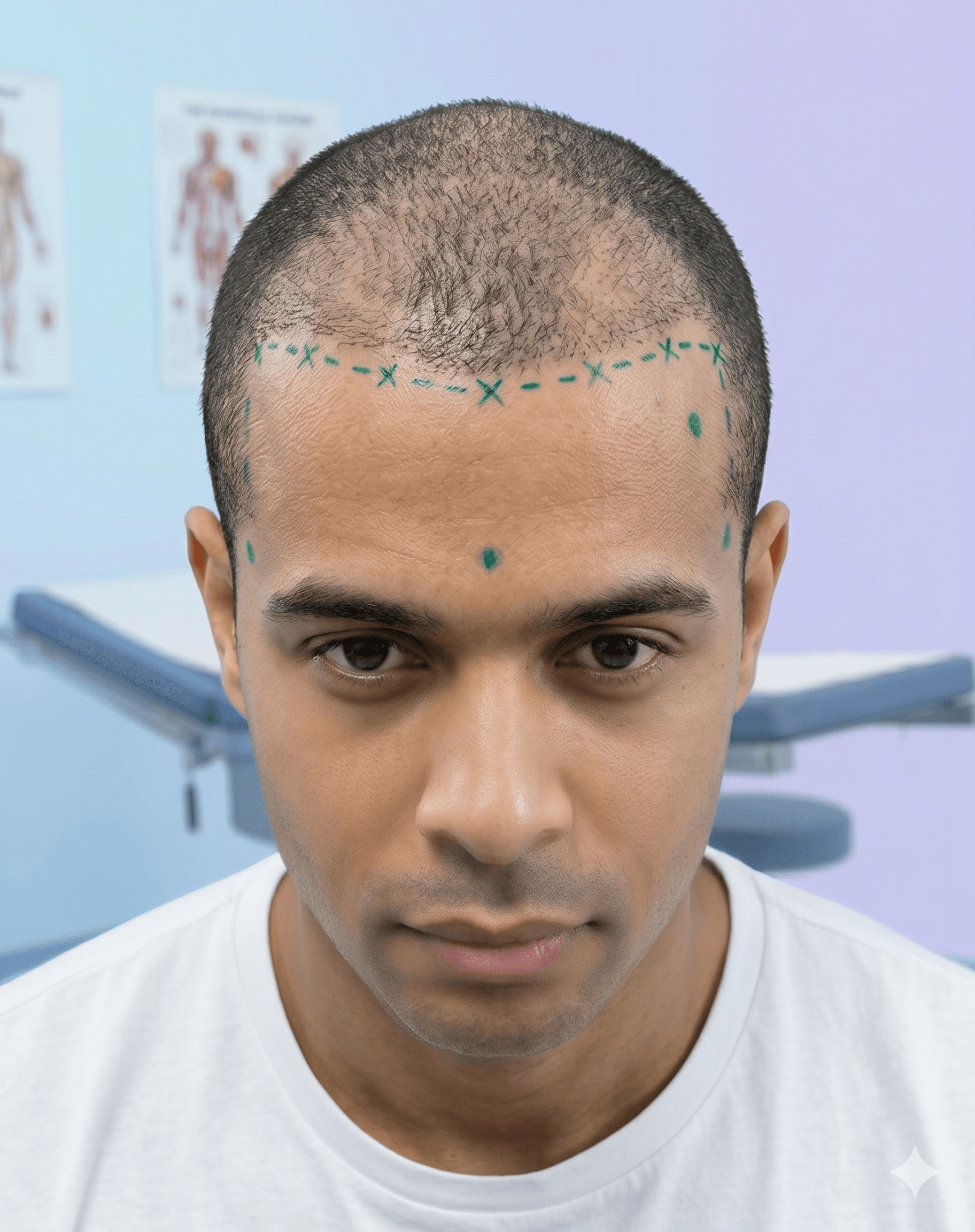
There is a moment — usually around three weeks after surgery — when patients message me worried. The transplanted hair is shedding. The scalp looks thinner than it did before surgery. They want reassurance.
I always give them the same answer: this is exactly what is supposed to happen. The follicles are alive. The hair shafts shed first. New growth comes later. This is a biological process, and biology does not work on the same timeline as a social media before-and-after post.
Understanding what is actually happening during each phase of hair transplant recovery makes the process significantly less stressful. Here is what I tell my own patients.
Why Transplanted Hair Sheds First
Hair follicles operate in a cycle — growth, transition, rest, shed, and regrowth. When follicles are extracted and transplanted, the physical stress of the procedure often pushes them into a resting phase. The hair shafts fall out, but the follicle itself remains alive in the scalp.
This is sometimes called shock shedding or effluvium. It is one of the most predictable parts of the process, yet it is the one that causes the most alarm in patients who were not properly prepared for it.
What I tell patients before surgery
“Your transplanted hair will shed within the first few weeks. When it happens, remember that we spoke about this. The follicles are fine. The shedding is expected. The process is working exactly as it should. Your job is to follow aftercare instructions and give it time.”
“Hair transplant growth is not a countdown. It is a biological process that operates on its own schedule. My job is to create the conditions for it to work. The patient's job is to be patient.”— Dr. Karamat Ullah Miami
The Realistic Month-by-Month Timeline
What follows is what I actually see in patients and what I prepare them for during consultation. Not a marketing timeline. Not an edited social media version. What really happens.
First Two Weeks
Days 1–14Expect discomfort, not discouragement
- Small scabs form around transplanted grafts — this is normal healing, not damage
- Mild swelling in the forehead area is common and temporary
- Donor area may feel tender and look reddened — this also resolves
- Follow washing instructions exactly — this is the most critical period for graft protection
- Avoid touching, rubbing, or scratching the recipient area
Two to Six Weeks
Shedding phaseThe hardest part — prepare for it
- Transplanted hair shafts begin shedding — this is completely expected
- The scalp may look thinner than before surgery at this stage
- Follicles remain alive beneath the surface despite visible shedding
- Most patients find this phase difficult emotionally — I prepare them for it in advance
- Continue following aftercare instructions carefully
Three to Four Months
Early growth beginsPatience is still required
- Fine new hairs begin emerging from transplanted follicles
- Growth is uneven and patchy at this stage — this is normal
- Hair may appear thin or wispy initially
- Do not judge the result at this stage — it is far too early
- Some areas may show earlier growth than others
Five to Seven Months
Visible progressThe encouraging phase
- Coverage improves noticeably — patients begin to feel genuine progress
- Hair thickens and becomes more consistent across transplanted areas
- Density continues developing — this is not the final density
- Many patients begin styling their hair more confidently at this stage
- Crown areas may still be catching up with the frontal zone
Eight to Twelve Months
Continued maturationResults becoming clear
- Hair continues to thicken and mature through this entire period
- Natural texture, colour, and wave pattern settles in fully
- Coverage in most transplanted areas reaches its full potential
- Crown work often reaches peak appearance toward the end of this phase
- This is when a proper evaluation of the result is meaningful
What I Observe at Follow-Up
What I tell patients the day of surgery
The hair you see transplanted today will shed. Almost all of it. Within the first few weeks. This is completely normal and does not mean the procedure failed. The follicles are alive beneath the surface and will grow again. I prepare every patient for this before we begin, because the shedding phase is when most anxiety happens.
Why the three-month mark is the hardest
At three months, some early growth appears but it is patchy, thin, and uneven. Patients often feel disappointed at this stage, especially if they compare themselves to heavily edited social media timelines. I actively check in with patients at this point because this is when realistic expectation setting matters most.
What six months actually looks like
By six months, most patients start to see something that genuinely encourages them. Coverage has improved significantly. Density is building. Hair is thickening. This is when the patience they have maintained starts to feel justified. But I remind them that it is still not the final result.
Why crown results take longer than the hairline
The crown area has different blood supply characteristics and often develops more slowly than the frontal zone. Patients with crown work should plan to evaluate results at twelve to eighteen months rather than judging at six. I am explicit about this during planning — it avoids unnecessary concern during a normal, expected process.

Full Growth Result
Natural hair growth achieved through patience and proper aftercare
Why Growth Speed Differs Between Patients
Two patients who had procedures on the same day, with the same surgeon, may have noticeably different timelines. This is not a mystery — it is biology. The factors that influence growth speed include:
This is why I am cautious about patients comparing their timeline to social media posts or other patients. Those variables make direct comparison meaningless. Focus on your own progress, not someone else's edited highlight reel.
For Patients Travelling from Overseas
Patients from the USA, UK, UAE, and other countries often ask how long they need to stay in Pakistan after surgery. Most patients can travel home within a few days after the procedure, once the initial scabbing phase has begun and basic aftercare is established.
Follow-up during the growth phase is handled through WhatsApp for international patients. I ask for regular photos at key milestones — four weeks, three months, six months, twelve months — so I can monitor progress and answer questions in context. This works well and has been the approach for the majority of my overseas patients.
“The patients who have the best experience with recovery are not the ones with the fastest growth. They are the ones who were honestly prepared for what to expect — and who followed their aftercare properly.”— Dr. Karamat Ullah Miami
When Results Are Fully Visible
I tell patients that a meaningful evaluation of their result should happen at twelve months. Some patients — particularly those with crown work, coarser hair, or certain scalp characteristics — may still see improvement beyond that point.
At twelve months, we can have an honest conversation about what the result looks like, whether there are areas that may benefit from additional work in a future session, and what the long-term management plan should look like as natural hair loss continues.
Hair transplant surgery is not a one-time event with an instant result. It is a decision that deserves careful planning, realistic expectations, and genuine patience. The patients who approach it that way — in my experience — are the ones who end up most satisfied with their outcome.
— Dr. Karamat Ullah Miami, Miami Plastic Surgery & Hair Transplant Center, Peshawar